Usted está aquí

Complex multiple ruptured aneurysms treated with embolization in a single session: case report.
Enviado por admin el Sáb, 04/03/2021 - 15:13

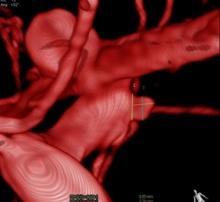
Multiple aneurysms are responsible for 15 to 35% of spontaneous subarachnoid hemorrhages, some of them being complex aneurysms. Its management is difficult due to the variation in the anatomical distribution and the difficulty of determining which aneurysm is the ruptured one. Embolization has an acceptable complication rate compared to clipping, with the additional benefit of being a minimally invasive technique with a short hospital stay.
Magnetic Resonance Tractography integrated to Neuronavigation in the surgical planning of a temporal arteriovenous malformation at the Dos de Mayo National Hospital. Case report.

Enviado por admin el Sáb, 04/03/2021 - 15:01

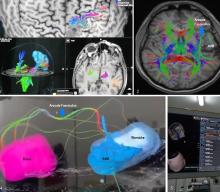
Complete resection of a cerebral arteriovenous malformation (AVM) eliminates the risk of bleeding. Although AVMs that adjoin eloquent areas have been studied with functional neuroimaging or intraoperative mapping, the usefulness of tractography has been limited to case reports or small series. Selecting the patient for surgery for an AVM close to an eloquent area is a challenge.

Intracranial Solitary Plasmacytoma: Case Report

Enviado por admin el Sáb, 04/03/2021 - 14:52

Solitary intracranial plasmacytoma is a rare plasma cell tumor that affects the skull, meninges, and brain. Unlike multiple myeloma, it does not have systemic manifestations. Its symptoms are characterized by a progressively growing tumor that generates local pain. The prognosis is good and the main treatment modalities are surgery and/or radiation therapy

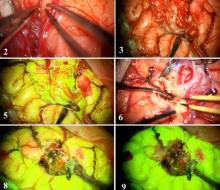
Advantages of intraoperative videoangiography with fluorescein integrated to the microscope in cerebrovascular pathology. Initial experience at Dos de Mayo National Hospital

Enviado por admin el Sáb, 04/03/2021 - 14:44

Fluorescein sodium (FNa) is a fluorescent substance used to evaluate cerebral blood flow. Videoangiography with FNa allows examining afferent and efferent vessels during surgery for arteriovenous malformations and evaluating flow during clipping of an aneurysm. We present our first cases of vascular microsurgery using microscope-integrated intraoperative fluorescein videoangiography at Dos de Mayo National Hospital in Perú.

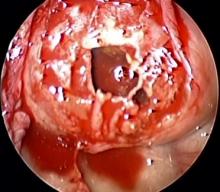
Transsphenoidal endoscopic surgical treatment of pituitary tumors at the Cayetano Heredia National Hospital in Lima Peru: outcomes of a series of cases

Enviado por admin el Jue, 12/31/2020 - 17:47

Transsphenoidal endoscopic surgery has become a surgical procedure of choice for the treatment of pituitary tumors. The objective of the present study was to describe the demographic, clinical characteristics, complications, and postoperative results of the patients who underwent transsphenoidal endoscopic resection. We present our results of this technique in patients operated from January 2016 to August 2018 at Neurosurgery Department of the Cayetano Heredia National Hospital.

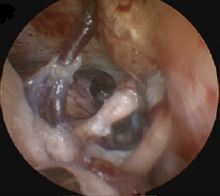
Endoscopy-assisted microsurgery in the resection of epidermoid tumor of the pontocerebellar angle

Enviado por admin el Jue, 12/31/2020 - 17:40

Intracranial epidermoid tumors are rare, slow-growing, and histologically benign congenital neoplasms. The microsurgical approach with endoscopic assistance is described as a minimally invasive technique that facilitates the work of the neurosurgeon in the complete resection of an epidermoid tumor located in the cerebellopontine angle. We present a case where we use a combined microscopic and endoscopy technique.

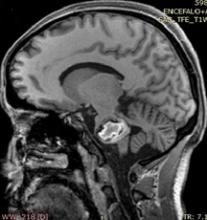
Microsurgical resection of a pontine cavernoma through a far lateral infratentorial supracerebellar approach

Enviado por admin el Jue, 12/31/2020 - 17:33

Cavernomas on the posterolateral pontomesencephalic surface can be approached from an extreme lateral supracerebellar infratentorial corridor, although the theory is scarce. The brainstem has a dense concentration of nuclei and fibers that are responsible for a high rate of morbidity when treating brainstem lesions. The objective of this work is to demonstrate the safe microsurgical resection technique for the complete removal of a pontine cavernoma.

Intracerebral hematoma caused by Moyamoya disease: a case report

Enviado por admin el Jue, 12/31/2020 - 17:23

Moyamoya disease is a chronic occlusive cerebrovascular disease of unknown etiology, characterized by bilateral stenotic and occlusive changes in the terminal portion of the internal carotid, as well as the presence of an abnormal vascular network at the base of the brain. We present a case of a 50-year-old female patient from China, with the Glasgow Coma Scale (GCS) of 9, and a clinical picture of stroke. Cerebral angiography revealed Moyamoya disease.

Tension pneumocephalus after surgical evacuation of chronic subdural hematoma: case report and pathophysiological mechanism

Enviado por admin el Jue, 12/31/2020 - 17:13

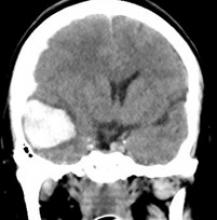
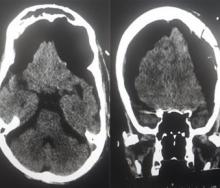
Pneumocephalus is a frequent complication following neurosurgical procedures. The diagnosis is based on tomographic findings and the clinical evolution of the patient. We present the clinical case of an 85-year-old man who underwent a keyhole craniotomy and subdural drainage placement due to the diagnosis of a chronic subdural hematoma (CSDH) and subsequently tension pneumocephalus.

Extramedullary intradural capillary hemangioma in a patient of 03 months of life: a case report

Enviado por admin el Jue, 12/31/2020 - 17:06

Capillary hemangioma is an extremely rare endothelial cell neoplasm as an extramedullary intradural tumor. Its presentation in infants is anecdotal and only 2 cases have been previously reported in the literature. We present a case of a 03-month-old infant with severe abrupt-onset paraparesis. Spinal MRI showed an intraspinal tumor at the T7, T8, and T9 levels, which captures contrast. The pathology was reported as capillary hemangioma.

Páginas

Suscribirse a Peruvian Journal of Neurosurgery RSS