Usted está aquí

Intracerebral foreign body granuloma simulates a brain tumor. case report

Enviado por admin el Lun, 03/28/2022 - 15:37

An intracranial foreign body granuloma is a chronic inflammatory reaction, due to materials used in cranial surgery; this complication is rarely reported in neurosurgery. The definitive diagnosis is by pathological anatomy since the images are very similar to those of a brain tumor. Treatment is total resection of the lesion.

Fusocellular / pleomorphic sarcoma in a patient with Haberland syndrome

Enviado por admin el Lun, 03/28/2022 - 15:31

The first case of pediatric spindle cell / pleomorphic sarcoma associated with Haberland syndrome or Encephalocraniocutaneous Lipomatosis, a rare ectomesodermal dysgenesis defined by the triad that includes ocular, skin, and central nervous system involvement, which is usually unilateral, is described. This disorder is attributed to a postzygotic mutation responsible for dysgenesis of the neural tube and crest.

Injured glioma syndrome: report of a case with unfavorable outcome

Enviado por admin el Lun, 03/28/2022 - 15:24

Wounded Glioma Syndrome (WGS) is a clinical picture described after resection of high-grade tumors. It is characterized by the presence of hemorrhage and postoperative edema that is difficult to manage, leading to significant sequelae and in some cases death. Pre and postoperative conditions play an important role in WGS, as well as factors related to surgery such as modification of tumor and peritumoral blood flow, altered coagulation, among others.

Aesthetic and psychological outcomes of cranioplasty, polymethyl methacrylate versus titanium mesh

Enviado por admin el Lun, 01/31/2022 - 01:17

Problems with appearance may negatively affect the mental health of individuals with disfigurement so, cranioplasty has an important role in improving the physical appearance of patients as well as their psychological symptoms. This study aims to highlight the aesthetic as well as the psychological outcomes of cranioplasty using the two most widely used synthetic graft materials; polymethyl methacrylate (PMMA) and titanium mesh.

Impact of the COVID-19 pandemic on patients with rupture of intracranial aneurysm at the Dos de Mayo National Hospital in Lima Peru

Enviado por admin el Mar, 11/30/2021 - 23:56

We did not find national reports on ruptured aneurysms treated in the context of the pandemic, this being one of the first studies that demonstrate the impact of the COVID-19 pandemic in patients with ruptured intracranial aneurysm. The population should be educated on how to act in case of specific symptoms such as sudden intense headache, neurological deficit, or acute chest pain, which should receive timely care, immediate referral, and priority of treatment in referral hospitals in order to reduce morbidity and mortality of complex neurological pathologies.

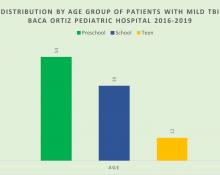
Mild cranioencephalic trauma in the child population. Experience at the Baca Ortiz Hospital, Quito-Ecuador, 2016-2019

Enviado por admin el Mar, 11/30/2021 - 23:45

The alteration at the anatomical and/or functional level, both motors, sensory and cognitive, a product of the sudden exchange of mechanical energy caused by an external force on the skull, is what defines a traumatic brain injury (TBI). Clinical observation in mild TBI includes observing children under 2 years of age with trauma without fracture or admission criteria clinically for 2 to 4 hours and observing children with symptoms or mechanism of fall for 4 to 6 hours not known. We studied mild TBI at Baca Ortiz Pediatric Hospital, Ecuador, from January 2016 to December 2019.

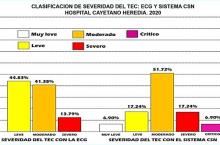
Neurological Severity Classification System (CSN-System) in adults with BTI, Hospital Cayetano Heredia, Lima - Peru, 2020. Preliminary study

Enviado por admin el Mar, 11/30/2021 - 23:36

Traumatic Brain Injury (TBI) is the disruption of brain function and architecture. The Glasgow Coma Scale (GCS) is the most widely used TBI severity classification; however, it assesses the functional status of the brain resulting from highly heterogeneous lesions and has little accuracy. The Neurological Severity Classification System (NSC System), a clinical-tomographic instrument designed to overcome lesion heterogeneity, assesses brain function and structure in determining the severity of BTI.

Presigmoid transpetrous approach (partial petrosectomy) combined with subtemporal transtentorial approach for petroclival meningioma

Enviado por admin el Mar, 11/30/2021 - 23:25

Petroclival meningiomas constitute 3 to 10% of meningiomas of the posterior fossa, they originate in the petroclival fissure, in the upper part of the clivus, petrosal apex, and medial to the trigeminal nerve. Resection of these tumors is a neurosurgical challenge. The combined partial petrosectomy approach associated with a sub-temporal approach is a technique described by various authors; however, its performance is considered highly complex. We report the case of a petroclival meningioma operated successfully in our hospital using this combined approach

Orbital schwannoma, a rare entity. case report

Enviado por admin el Mar, 11/30/2021 - 23:19

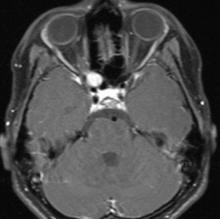
Orbital schwannoma is a rare pathology, which constitutes approximately 1 to 6.5% of orbital tumors, and can originate from the ophthalmic branch of the 5th cranial nerve or from perioptic sympathetic nerves. The first-line treatment is surgery, and total resection provides a good prognosis.  We presented a case of 12-year-old woman, with a 9-year illness, characterized by a progressive decrease in right visual acuity until reaching amaurosis.

Double aneurysm clipping of true fetal posterior communicating artery by minipterional approach plus control with sodium fluorescein: a case report

Enviado por admin el Mar, 11/30/2021 - 23:12

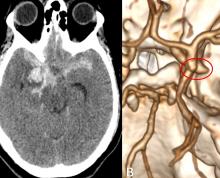
True fetal or fetal type posterior communicating artery aneurysms (PComA) are a technical challenge for the neurosurgeon in both endovascular and microsurgical treatment. Microsurgical clipping using minimally invasive approaches is a safe and optimal alternative solution. We presented a case of a 53-year-old patient who had subarachnoid hemorrhage from a true fetal PComA.

Páginas

Suscribirse a Peruvian Journal of Neurosurgery RSS