Usted está aquí

Endovascular management of non-ruptured intracranial aneurysms with flow diverter devices. First experience in Peru.
Enviado por admin el Sáb, 08/17/2019 - 20:01

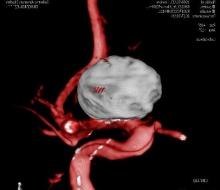
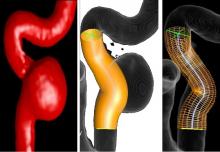
Endovascular treatment of non-ruptured intracranial aneurysms with flow diverter devices is a technique that currently has many indications for its use. We present a retrospective review of consecutive cases treated with flow diverters at our institution. Since October 2012 to April 2017, twenty-one patients were treated with a total of 29 non-ruptured aneurysms.
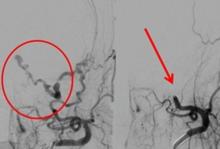
Curative embolization of dural arteriovenous fistula using Onyx. Case report

Enviado por admin el Sáb, 08/17/2019 - 19:46

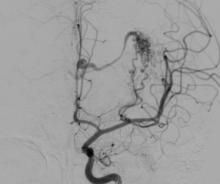
Dural arteriovenous fistulas (DAVF) are vascular lesions that require a high suspicious index for its diagnosis, because of their wide variety of clinical manifestations, moreover, invasive procedures such as digital subtraction angiogram (DSA) is the gold standard and is required for its diagnostic confirmation.

Endovascular management of craniospinal junction arteriovenous fistula: Case report

Enviado por admin el Sáb, 08/17/2019 - 19:37

Craniocervical arteriovenous fistulas (AVF) are rare entities. A high index of suspicious is required for its diagnosis. Surgery, embolization or both are available treatments. We present the case of a young woman who presented with syncope. Additional studies revealed the presence of a craniocervical junction AVF.

Curative transvenous embolization of a challenging ruptured thalamic arteriovenous malformation using Onyx: Case report.

Enviado por admin el Sáb, 08/17/2019 - 19:26

Arteriovenous malformations (AVM) are typically treated by arterial approach. In selected cases, venous embolization is an option with good results. We present the case of a ruptured thalamic arteriovenous malformation treated successfully with transvenous embolization using Onyx, achieving complete obliteration of the nidus.

Revascularization with first generation bypass plus carotid reconstruction with tandem clipping of complex paraclinoid aneurysm. First case in the Dos de Mayo National Hospital in Lima - Peru.

Enviado por admin el Sáb, 08/17/2019 - 19:06

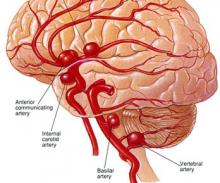
Cerebral aneurysms are formed due to a weakness in the arterial wall, this cause a dilation and the subsequent risk of rupture, conditioning subarachnoid hemorrhage, being one of the causes of cerebrovascular disease with higher risk of morbidity or death. We presented the first brain revascularization microsurgery for the treatment of a complex cerebral aneurysm performed at the Dos de Mayo National Hospital.

Mini-pterional craniotomy for clipping of anterior circulation Aneurysms

Enviado por admin el Mié, 05/01/2019 - 01:26

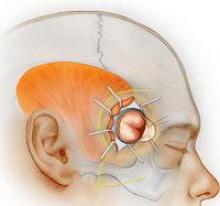
Mini-pterional Craniotomy is a minimally invasive surgery for brain aneurysms, which maintains the advantages of the standard pterional approach, but it minimizes the exposure of brain parenchyma and soft tissue manipulation. It is a valid surgical alternative in selected cases, mainly from PComA and MCA aneurysms.

Epidemiological, clinical and laboratory profile of patients submitted to micro-surgical treatment by multiple aneurysms at the Guillermo Almenara Hospital

Enviado por admin el Mié, 05/01/2019 - 01:15
Multiple aneurysms in the Guillermo Almenara National Hospital is a frequent pathology, found in 18.33% of patients with aneurysms. They are related to the female sex, history of high blood pressure and the arteries more affected are both Middle Cerebral Artery.

Severe intracranial hypertension treated with 7.5% hypertonic solution in a subarachnoid hemorrhage case by rupture of aneurysm

Enviado por admin el Mié, 05/01/2019 - 00:55

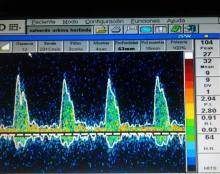
The Transcranial Doppler TCD is a useful tool for the hemodynamic monitoring of the brain when there is cerebral injury due to subarachnoid hemorrhage, it allows us to act in time, since it is a non-invasive tool that is done in the patient's bed.

Aneurysm associated with fenestration of Basilar artery treated by embolization with coils

Enviado por admin el Mié, 05/01/2019 - 00:42
Fenestrated basilar artery aneurysms are rare and complex vascular diseases. The endovascular treatment by coil embolization is the first option although other endovascular techniques have also been described.

Penumbra Coil and Stent: An option in large aneurysms of width neck

Enviado por admin el Mié, 05/01/2019 - 00:27

In some complex aneurysms, despite endovascular treatment, there are high rates of incomplete occlusion. Penumbra coils are an efficient and cost-effective alternative to embolization in large aneurysms, with adequate packing and occlusion and with a low rate of complications.

Páginas

Suscribirse a Peruvian Journal of Neurosurgery RSS