Usted está aquí

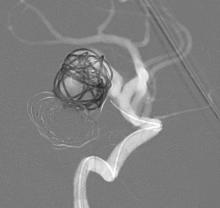
Endovascular treatment of a large, embolized, unruptured cerebral aneurysm that presented rechanneling
Enviado por admin el Mar, 06/30/2020 - 23:29

Endovascular treatment of ruptured and non-ruptured brain aneurysms is an appropriate option in most patients. In narrow neck aneurysms, treatment with coils is sufficient, but in those with wide necks, the use of stent-assisted coils or flow diverters is necessary. Endovascular treatment of intracranial aneurysms is effective and provides complete occlusion in up to 85% of cases, however, there are cases of incomplete obliteration or recanalization that require treatment.
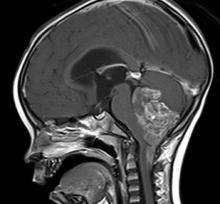
Experience in diagnostic and treatment of central nervous system tumors in children less than 2 years at the Baca Ortiz Pediatric Hospital, Quito-Ecuador, 2016-2019

Enviado por admin el Lun, 03/23/2020 - 01:16

Tumors of the central nervous system (CNS) in children between 0 and 2 years of age are infrequent, so their diagnosis and treatment constitute an important challenge for every pediatric neurosurgical center, to which is added the comorbidities typical of this age. The objective of this study was to describe the diagnostic and therapeutic experience of a neurosurgical Department of national reference in Quito, Ecuador.

Use of social media networks in Neurosurgery

Enviado por admin el Lun, 03/23/2020 - 01:04

Neurosurgery as a medical discipline has always been on the cutting edge of technology and the latest advancements. It’s not a surprise why modern neurosurgeons actively utilize various social media platforms, in order to share the latest news or showcase interesting cases they face daily. From Twitter to LinkedIn neurosurgical professionals of the world share the knowledge and connect with each other in order to advance their skills to the next level.

Isolated intracranial Rosai-Dorfman disease: case report

Enviado por admin el Lun, 03/23/2020 - 00:46

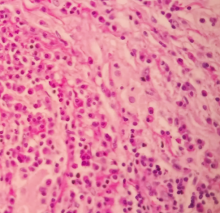
Rosai-Dorfman disease is a pathology of histiocytic, proliferative, idiopathic and benign type characterized by sinus histiocytosis and massive lymphadenopathy. The most frequent clinical presentation is painless bilateral cervical lymphadenopathy. Extra-nodal involvement occurs in 43% of cases and central nervous system (CNS) involvement in 4%. We present a case of this rare entity.

Enterogenous cyst of the posterior fossa: a case report

Enviado por admin el Lun, 03/23/2020 - 00:37

The intracranial enterogenous cyst is a benign cystic tumor lesion of very rare frequency worldwide. These cysts can occur at any level of neuroaxis and their malignant transformation is rare. The case of a 32-year-old woman with a cystic lesion in the posterior fossa at the level of the occipitocervical junction is presented.

Minimally invasive surgery using Mini-pterional Interfascial Approach for the Clipping of a Ruptured Aneurysm of the right Carotid Bifurcation at the Dos de Mayo National Hospital, Lima-Peru

Enviado por admin el Lun, 03/23/2020 - 00:28

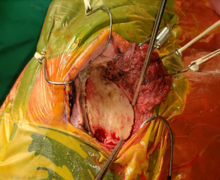
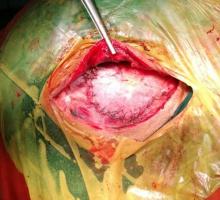
The minipterional interfascial approach has been used in the clipping of aneurysms of the anterior circulation, the middle cerebral artery, the posterior communicating, the anterior communicating, the choroid segment and the ophthalmic; however, the use of this approach in bifurcation aneurysms has not been extensively described. We present a case using this promising technique.

Minipterional interfascial approach for microquirurgical treatment of ruptured and unruptured anterior circulation aneurysms. Initial experience in the Dos de Mayo National Hospital in Lima - Peru

Enviado por admin el Mié, 11/27/2019 - 22:50

The Minipterional craniotomy is reliable, less invasive, it maintains the advantages of the pterional approach but avoids greater exposure of the parenchyma and tissue manipulation. Aneurysms of the anterior circulation, ruptured and unruptured, can be treated safely and effectively with limited bone extraction, good cosmetic results and good temporomandibular function.

Pituitary abscess: A case review

Enviado por admin el Mié, 11/27/2019 - 22:43
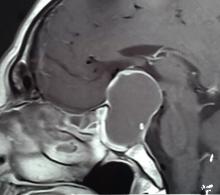
Pituitary abscess is an intrasellar infection that generates a clinical picture like any pituitary tumor. Its origin can be of hematogenous origin or by infection of a nearby site or pre-existing lesion. We present the case of a 38-year-old male patient with progressive headache, vomiting and visual impairment is presented. It was evaluated with magnetic resonance of the sellar region. Transsphenoidal surgery was performed and the infusion of intravenous antibiotic therapy continued.

Single-session curative embolization of a ruptured supratentorial arteriovenous malformation: Case report

Enviado por admin el Mié, 11/27/2019 - 22:36
Microsurgery has been the gold standard for the treatment of arteriovenous malformations (AVM), however, endovascular therapy has emerged as an option in recent years. We present the case of a previously healthy 45-year-old woman that presented with a ruptured AVM treated successfully with curative embolization.

Aqueductoplasty with stent placement by neuroendoscopy for the management of a cyst of the IV ventricle in a case of neurocisticercosis

Enviado por admin el Mié, 11/27/2019 - 22:29

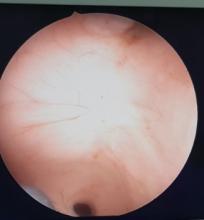
Endoscopic aqueductoplasty with stent placement in the Silvio aqueduct is an effective measure in cases of isolated cyst in the fourth ventricle, achieving good clinical and imaging evolution compared to other therapeutic options. We present the case of a 34-year-old patient with a history of neurocysticercosis who received antiparasitic treatment and the placement of a DVP, presenting multiple dysfunction with severe dilatation of the IV ventricle. 

Páginas

Suscribirse a Peruvian Journal of Neurosurgery RSS