Usted está aquí

Intraoperative Intracraneal pressure monitoring in decompressive craniectomy for severe TCE

Enviado por admin el Lun, 05/08/2017 - 16:03

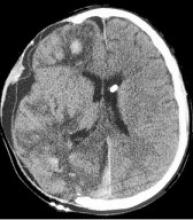
Decompressive craniectomy (DC) has proved to be an effective method in reducing intracranial pressure (ICP) when other treatments have failed. ICP monitoring studies in the pre and post operative show that this reduction is immediate and sustained within 48 hours. However, little is known about the variation of the ICP during the performance of decompressive craniectomy. The authors report the case of a patient with severe TBI who underwent ICP monitoring during the performance of DC in the Guillermo Almenara Hospital in 2009.
Surgical treatment of cerebral radiation necrosis complicating stereotactic radiosurgery in skull base meningioma

Enviado por admin el Lun, 05/08/2017 - 15:53

Although stereotactic radiosurgery has been proven to be an effective and noninvasive treatment for some skull base meningiomas, complications such as swelling, radiation necrosis, and cranial nerve dysfunction are possible in some cases. As to date, a surgical treatment for radiation necrosis (induced by stereotactic radiosurgery) in order to treat skull base meningioma has yet to be reported in few cases. 

Decompressive Craniectomy in the Management of Refractory PostTraumatic Intracranial Hypertension

Enviado por admin el Dom, 05/07/2017 - 22:00

Traumatic intracranial hypertension is the major pathophysiological issue of traumatic brain injury (TBI) and its treatment usually demands general and specific measures; nevertheless decompressive craniectomy is an extreme resource available for refractory cases, current data are not enough to define its indications and long term results.They concluded that descompressive craniectomy is a useful option for ICP control and a better outcome of the TBI in the long term.

Early results of cervical artroplaty using Prodisc-C

Enviado por admin el Dom, 05/07/2017 - 21:42

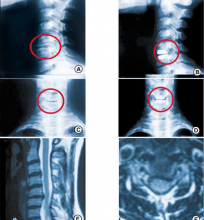
The use of an artificial cervical disc is a new technique that can replace the classical discectomy and fusion for lesion in the lower cervical spine. The authors conducted a study in 27 patients between July 2004 and June 2007 using a Prodisc-C in 35 cervical artroplasties. They concluded that the use of ProDisc-C in young patients appear to be an excellent option for the treatment of cervical disc herniation.

Benefits of the Spinal anesthesia in Surgery of Disc Herniation

Enviado por admin el Dom, 05/07/2017 - 21:31

The authors present a study in 2000 patients to demonstrate the advantage of spinal anesthesia in surgery of disc herniation. The pain caused by disc herniation is among the symptoms that most affect the man, for sure the pain is more frequent, and by far the most important. It jeopardizes the quality of life the daily activities and hence their productivity.
 

Schwannoma of the cauda equina causing low back pain and bilateral crural paraparesis

Enviado por admin el Dom, 05/07/2017 - 21:08

Neuromas, neurinomas, or neurilemmomas are benign tumors of peripheral nervous system, which have Schwann cell origin. Typically, schwannomas are typically solitary, ovoid or spindle, as well encapsulated and found along the peripheral nerves or surrounded by them. The location of the tumor is prevalent in the cervical and thoracic, and less frequent in the lumbosacral spine Moreover, growth has dragged normally are not aggressive, not malignant and are subject to cure by surgery.

Clinical and Epidemiological Characteristics of Patients with Hydrocephalus Secondary to Subarachnoid Hemorrhage Hospitalized in the Neurosurgery Department of Rebagliati Hospital 2007-2008

Enviado por admin el Dom, 05/07/2017 - 19:35

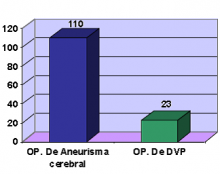
The author reviewed medical records of 110 patients who underwent surgical clipping of cerebral aneurysm in order to determine the clinical and epidemiological characteristic of patients with hydrocephalus secondary to subarachnoid hemorrhage (SAH) during the period April 2007-2008. He concluded that a judicious indication of a shunt greatly influences the patient's recovery, despite the fact that this one is multifactorial.

Deconstructive embolization of no surgical cerebral aneurysms: a ancient solution for a complex subject

Enviado por admin el Dom, 05/07/2017 - 19:26

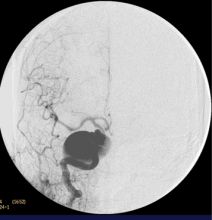
The authors concluded in their study that deconstructive embolization of wide neck and fusiform aneurysms still remains a useful technique in selected cases. The clinical and angiographic criteria in the balloon test occlusion seem to predict accurately the tolerance of the parent vessel for its definitive occlusion in these challenging lesions. They reviewed retrospectively the clinical and radiographic data of 11 cases treated between 1995 and 2009.

Spinal Metastases of Hepatocellular Carcinoma in Patient with Suspected Recurrence of Spinal Tumor

Enviado por admin el Dom, 05/07/2017 - 19:16

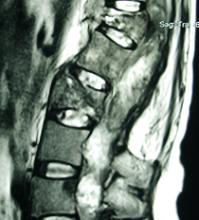
Spinal metastasis from hepatocellular carcinoma is an uncommon but serious disorder, occurring in 1.2 to 3% of patients with hepatocellular carcinoma, which is a common malignancy in developing countries and although its extrahepatic spread is common especially to lung and lymph nodes, spinal metastasis is rare and only few reports have been described in the past.

Tension Pneumoencephalus Secondary To Frontal Sinus Osteoma: Case Report And Literature Review.

Enviado por admin el Dom, 05/07/2017 - 19:07

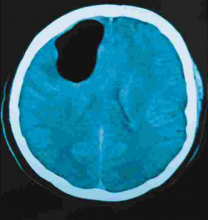
The authors report a 37 year-old man with tension pneumoencephalus secondary to frontal sinus osteoma. He had history of headache and left hemiparesia. CT scan revealed a large volume of air entrapped in the right frontal lobe related to an osteoma in the frontal sinus. The osteoma eroded the posterior wall of the sinus and extended into the cranial fossa.

Páginas

Suscribirse a Peruvian Journal of Neurosurgery RSS