Usted está aquí

Aneurysms and other intracranial lesions in polycystic kidney disease: illustrative case and review
Enviado por admin el Mié, 11/15/2023 - 18:34

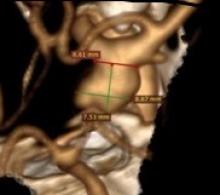
Polycystic Kidney Disease (PKD) is a common hereditary kidney disease that can be accompanied by the appearance of intracranial lesions. Among these lesions, cerebral aneurysms are often found in patients with PKD, which can lead to increased morbidity and mortality. These aneurysms can have clinical and surgical implications, making them a serious concern for patients with PKD.

Selective posterior corpus callosotomy in a child with Lennox–Gastaut Syndrome: case report

Enviado por admin el Mié, 11/15/2023 - 18:24

In epilepsy refractory to medical treatment which presents multiple and bilateral epileptogenic foci such as Lennox Gastaut syndrome (LGS) the surgical alternative is disconnection surgery such as callosotomy. Posterior callosotomy is indicated in cases of atonic seizures with posterior resection, leading to better seizure control. We present the case of a patient with Lennox Gastaut syndrome who required a posterior callosotomy achieving complete control of atonic seizures.

Central diabetes insipidus post-ventriculostomy. case report

Enviado por admin el Mié, 11/15/2023 - 18:11

Diabetes insipidus is a rare complication in cerebral vascular pathology. Although its presentation is associated with surgery for pituitary tumors, few cases have been reported after the evacuation of cerebral hemorrhages. We present a patient with Diabetes insipidus in a patient with ventriculostomy due to intraventricular hemorrhage.

Experience in lumbar microdiscectomy at the Guillermo Almenara Irigoyen Hospital 2018 -2021

Enviado por admin el Vie, 06/30/2023 - 21:19
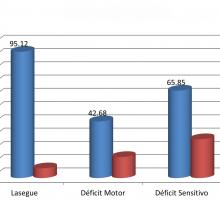
Herniation of the nucleus pulposus (HNP) is the leading cause of sciatica. The standard diagnostic test is magnetic resonance imaging and treatment can be conservative or surgical. The most common surgical technique is lumbar microdiscectomy. The objective of the study was to know the epidemiological and clinical profile, as well as the surgical results of patients undergoing lumbar microdiscectomy at the Almenara Hospital from January 2018 to August 2021.

Beginnings of endoscopy spine surgery in Peru

Enviado por admin el Vie, 06/30/2023 - 21:10
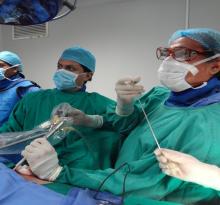
In recent years, spinal endoscopy has become increasingly common in our setting; however, its use is not recent. The first reported cases date back to the early 2010s by a team from the Cayetano Heredia Hospital in charge of Drs. Wesley Alaba and Jerson Flores. Although other minimally invasive procedures such as nucleoplasty, nucleolysis, or percutaneous rhizotomies had already been used since the 2000s, it was not until 2011 that endoscopy was used for the first time in a standardized manner in spinal surgery with the endoscope as the only element of vision, successfully resecting a vertebral lesion.

Spinal tuberculosis: a diagnostic challenge. case report and literature review

Enviado por admin el Vie, 06/30/2023 - 21:03
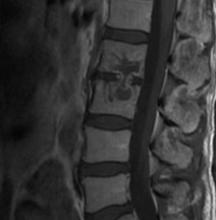
Spinal tuberculosis TB represents 1% of all TB cases and 50 - 60 of osteoarticular TB cases. Certain atypical clinical and radiological presentations of spinal tuberculosis are described infrequently. The lack of recognition of these presentations can lead to a delay in diagnosis and the initiation of treatment. We present the case of a patient with atypical vertebral tuberculosis operated on in our hospital.

Extrapleural transthoracic discectomy without fusion for resection of giant calcified dorsal disc hernia: case report

Enviado por admin el Vie, 06/30/2023 - 20:48
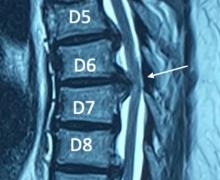
Calcified thoracic disc herniations are rare and their approach represents a surgical challenge when they are giant and symptomatic Surgery is indicated in cases of intractable back pain with medical management. We present the case of a patient with a giant calcified thoracic hernia who was successfully operated on in our hospital using an extrapleural transthoracic approach.

Ancient thoracic schwannoma: a rare etiology of spinal cord compression. case report

Enviado por admin el Vie, 06/30/2023 - 20:38
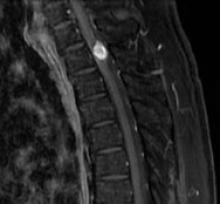
Ancient schwannoma is a rare subtype of spinal schwannomas. It is named for the degenerative changes that it can present. Contrast-enhanced magnetic resonance helps us diagnose, as it can show heterogeneous lesions that capture ring contrast. The treatment is surgical.

Combined treatment “microsurgery-arthrodesis”: total resection of dorsal schwannoma plus dorsal arthrodesis

Enviado por admin el Vie, 06/30/2023 - 20:27
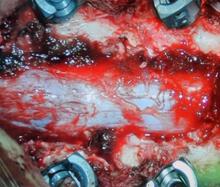
Schwannomas are benign, unusual, and slow-growing tumors originating in Schwann cells; they constitute 30% of spinal tumors.  The diagnosis is clinical and imaging. The gold standard of treatment is total excision to avoid recurrence. Surgical planning must be holistic, and the surgical field must be wide to allow complete excision.

Prognostic factors in the survival of patients operated of astrocytoma grade III at the Guillermo Almenara Hospital Lima- Peru. 2003-2009

Enviado por admin el Lun, 06/20/2022 - 02:15
Anaplastic astrocytoma (AA) or grade III is a primary brain tumor, astrocytic, malignant, and diffusely infiltrating. The survival of patients depends on several clinical and treatment factors, being this unknown in our environment. The objective of this study was to determine the survival of patients operated on for grade III astrocytoma and the impact of preoperative and postoperative prognostic factors.

Páginas

Suscribirse a Peruvian Journal of Neurosurgery RSS