Usted está aquí

Pneumocephalus and CSF leak secondary to skull base fracture by pyrotechnical object: case report

Enviado por admin el Mar, 11/30/2021 - 21:05

Pneumocephalus is mainly associated with traumatic injuries, being a rare complication but with high mortality rates. The symptoms are not specific, but in the event of trauma it is necessary to suspect this entity to carry out a timely diagnosis and treatment, since being the product of the skull base fracture it can cause communication with the outside, and the appearance of cerebrospinal fluid (CSF) leak. We present a 38-year-old male patient who suffers trauma from a pyrotechnic explosion.
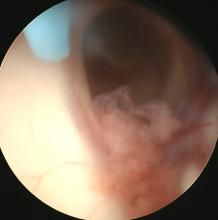
Choroid plexus coagulation as an isolated procedure in the treatment of hydrocephalus

Enviado por admin el Vie, 05/21/2021 - 00:03

We evaluated the effectiveness of isolated choroid plexus coagulation (CPC) as a treatment for hydrocephalus in various clinical settings and the variables associated with its success. We found that Choroid Plexus Coagulation (CPC) is a viable treatment alternative in the management of hydranencephaly, choroid plexus hyperplasia (CPH), and in selected cases of hydrocephalus without the aforementioned characteristics. However, studies are needed to compare CPC with shunt therapies before qualifying it as the first line of treatment.

Prognostic factors of success of endoscopic third ventriculostomy with choroid plexus cauterization in the management of hydrocephalus: a narrative review

Enviado por admin el Jue, 05/20/2021 - 23:57
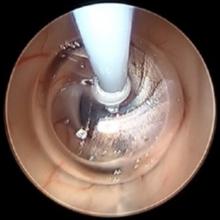
Currently, endoscopic third ventriculostomy with choroid plexus coagulation (ETV / CPC) has been positioned as a reasonable alternative to cerebrospinal fluid (CSF) shunt in the treatment of hydrocephalus, both in developing countries and in non-limited settings of resources. The results show that the short-term outcomes strongly depend on the age of the patient at the time of the procedure, the etiology of the hydrocephalus, anatomical characteristics, and previous procedures.

Extradural minipterional approach in clipping of ruptured and unruptured complex aneurysms in the “Luis N. Saenz” PNP Hospital Complex: case report

Enviado por admin el Jue, 05/20/2021 - 23:51

The complexity of an intracranial aneurysm is defined by its location, size, previous treatment, presence or absence of collateral circulation, intraluminal thrombus, or calcification of the aneurysm wall. The treatment of these aneurysms must be based on the balance between the associated risks and the benefit for the patient; Within microsurgical techniques, the extradural minipterional approach is described.

Experience of endovascular management of a unruptured thalamus-mesencephalic arteriovenous malformation associated with venous aneurysm in a pediatric patient. case report

Enviado por admin el Jue, 05/20/2021 - 23:45

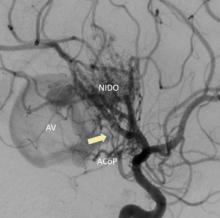
The treatment of arteriovenous malformations (AVMs) of the basal ganglia, the thalamus, and the insula is complex, due to the eloquence of the neural structures involved. They constitute between 4.3% and 11% of all AVMs and are associated with a high rate of morbidity and mortality due to the high risk of bleeding due to their inaccessible location. Recent advances in endovascular therapy have allowed obtaining good results with curative potential.

McCune Albright syndrome, craniofacial manifestations, and surgical treatment. pediatric case report

Enviado por admin el Jue, 05/20/2021 - 23:39

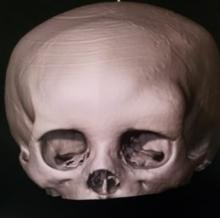
McCune-Albright syndrome (MAS) is a rare and complex genetic disease that affects the skin, skeleton, and endocrine system. The clinical triad described is composed of polyostotic fibrous bone dysplasia, café-au-lait skin pigmentation, and precocious puberty. The variable constellation of symptoms arises from a somatic activating mutation of the GNAS gene, which is present in many types of tissues

Bifrontal epidural hematoma. A case report at 3800 mamsl in Puno, Perú

Enviado por admin el Jue, 05/20/2021 - 23:32

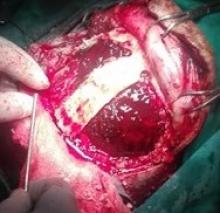
Epidural hematomas are one of the most frequent complications of head injuries. Bifrontal epidural hematomas (BEH) are rare, are associated with high-intensity trauma, and are associated with high mortality. We present the clinical case of a patient with bifrontal epidural hematoma with a Glasgow Coma Scale of 6/15 on admission.

Esophageal fistula as an infrequent complication of anterior cervical fusion. case report

Enviado por admin el Jue, 05/20/2021 - 23:25

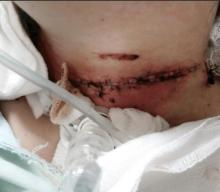
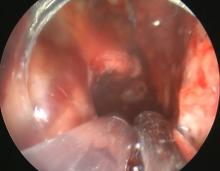
The morbidity of anterior cervical fusion surgery is low and one of the least frequent is an esophageal perforation, but this can bring severe complications such as sepsis, mediastinitis, or death. Optimal treatment is multidisciplinary, although it remains controversial; This consists of primary closure or closure by means of a muscle flap, accompanied by rest of the esophagus and a high protein diet.

Evacuation of intracerebral hematomas by Neuroendoscopy: results in a series of cases

Enviado por admin el Sáb, 04/03/2021 - 15:29

Intracerebral (ICH) and intraventricular (IVH) hemorrhage cause severe morbidity and a high mortality rate. Early surgical evacuation with minimal damage to brain tissue is essential. Endoscopic evacuation using an Endoport system is a promising technique. We present the results of the endoscopic evacuation of ICH and IVH in patients operated from 2010-2019 at the Almenara Hospital in Lima-Peru.

Definitive treatment of cerebral aneurysms at the Cayetano Heredia National Hospital in Lima Peru: a case series results.

Enviado por admin el Sáb, 04/03/2021 - 15:22

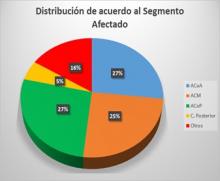
Subarachnoid hemorrhage (SAH) due to rupture of a cerebral aneurysm continues to be a disease with high morbidity and mortality in our setting, despite advances in microsurgery and endovascular therapy. The objective of the present study was to determine the demography, vascular territory, and complications that occur in the perioperative management of patients with ruptured cerebral aneurysms treated at the Cayetano Heredia Hospital.

Páginas

Suscribirse a Peruvian Journal of Neurosurgery RSS