Usted está aquí

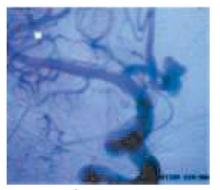
Anterior communicating artery aneurysms: Management and statistic
Enviado por admin el Sáb, 05/06/2017 - 17:23

In this prospective study, the authors report their recent experience with 28 patients, using a combined surgical and endovascular team for the management of ACoA aneurysms from 2000 to 2007. Patients were divided into group A, which included 24 Micro surgical patients (18 of them with subarachnoid hemorrhage, group A1, and 6 with unbroken aneurysms, group A2); And group B, consisting of 4 patients treated with GDC embolization.
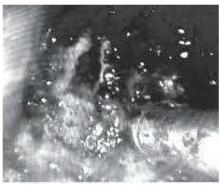
Endoscopic anatomy of the sella turcica

Enviado por admin el Sáb, 05/06/2017 - 17:13

Endonasal endoscopic surgery is a tema surgery which requires learning of non-familiar surgical anatomy, use of new technologies and the development of new surgical skills. The major concerns during surgery are the identification of the internal carotid artery, optic nerves and preservation of small cerebral vessels. The potential for a disaster is great if the surgeon is unfamiliar with the anatomy, there is a lack of adequate equipment and clumsiness to maintain adequate visibility with the endoscope.

Current concepts in peripheral nerve surgery: When to operate an injured nerve?

Enviado por admin el Sáb, 05/06/2017 - 16:57

Peripheral nerve injuries represent a functional deficit of the affected limb that can be reversed if treated properly. The time at which an injury is operated together with the use of the careful microsurgical reconstruction technique, are the most important factors in the final treatment outcome. Open lesions with nerve involvement should be considered surgical in the short term. Closed lesions usually, with the exception of two exceptions described in the text, are scanned from three months to six months after trauma.

Spinal Cysticercosis: Case Report

Enviado por admin el Sáb, 05/06/2017 - 16:48

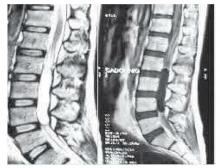
Spinal cysticercosis is rare (0.7-3.2%) even in endemic regions and may require more aggressive management due to the natural confines of the spinal canal. The condition of the lesion, its size, and the inflammatory response generated by cyst degeneration are important factors for the management of spinal CC. We report two cases of spinal cysticercosis in which patients underwent surgical treatment.

Clinical radiological results of segmented instrumentation in thoracolumbar vertebral fractures at Guillermo Almenara National Hospital

Enviado por admin el Sáb, 05/06/2017 - 16:04

The authors present a retrospective and descriptive study of 34 patients, 25 men and 9 women 9; mean age 33.23 years, with diagnosis of thoracolumbar vertebral fracture treated surgically with instrumentation (transpedicular fixation or anterior plaque) in the Department of Neurosurgery of Guillermo AlmenaraHospital in Peru between Jan 1996 and Dec 2002. The average follow-up was 23 months (from 8 to 36 months) and all had neurological deficit: total(14) and partial(20).

Vertebroplasty in pathological fractures of the spine

Enviado por admin el Sáb, 05/06/2017 - 15:52

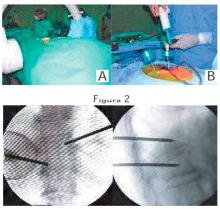
Percutaneous Spinal Vertebroplasty give more consistency or hardness to the fractured spine.The technique consists to guide placement of the needle and the plastic bone cement that is injected into the vertebrae to stabilize them using Poly methyl methacrylate (PMMA), which is radiopaque due to sterile barium powder, it is injected into the bone in the vertebral fractured body through a stem.

Arteriovenous malformations in children

Enviado por admin el Sáb, 05/06/2017 - 15:34

In cerebral vascular pathology in children, arteriovenous malformations (AVMs) are the most frequent and they are being detected now more and more even at the asymptomatic stage. On the other hand, we know that the surgery was the mainstay of their treatment; However in the last decades the endovascular techniques and radiosurgery have evolved, and currently for the treatment of AVMs, several options are considered as unique or adjuvant according to guidelines established in various hospitals.

Radiosurgery in the treatment of brain metastases

Enviado por admin el Sáb, 05/06/2017 - 15:23

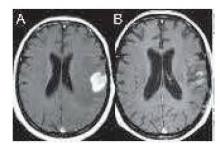
Radiosurgery may be chosen for brain metastases smaller than 3.5 cm. Of large diameter and with the primary tumor controlled in the following scenarios: 1) Solitary metastases and in good neurological conditions could be treated with radiosurgery only 2) Relatively radioresistant metastases such as melanoma and renal cell carcinoma, 3) Multiple metastases, complementing with total brain radiotherapy,and 4) Recurrent metastases.

Transcranial doppler to detect regional cerebral vasospasm in patients with SAH of aneurysmal cause.

Enviado por admin el Sáb, 05/06/2017 - 15:13

Transcranial Doppler (TCD) is a useful tool in the diagnosis of both regional and diffuse vasospasm, as it is demonstrated in this case (corroborated by angiography). This makes it possible not to reduce triple therapy H when the patient still requires it, TCD is a important arsenal we have, it is not enough clinical diagnosis, since the TCD is noninvasive, fast, online, is performed in bed Patient, and the Doppler vasospasm occurs before clinical vaospasm which makes it a very useful tool

Pituitary carcinoma: Case report

Enviado por admin el Sáb, 05/06/2017 - 14:59

The pituitary carcinomas are rare and aggressive adenohypophyseal tumors, that usually present themselves like invasive macroadenomas, producing ACTH or prolactin. For clinical definition, they have metastases of a pituitary neoplasm, craniospinal or systemic. It is possible the existence of a time of latency between the diagnosis of pituitary tumor and the diagnosis of pituitary carcinoma that may vary from 5 to 12 years.

Páginas

Suscribirse a Peruvian Journal of Neurosurgery RSS