Usted está aquí

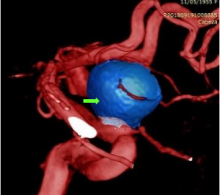
Endovascular treatment with coil Penumbra of a large aneurysm of the right ophthalmic segment
Enviado por admin el Mar, 04/09/2019 - 20:21

Coiling is the most common endovascular technique used for the treatment of aneurysms. Different types are available and Penumbra coils are a new option in the endovascular armamentarium.
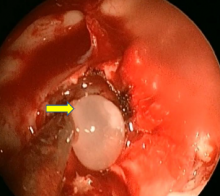
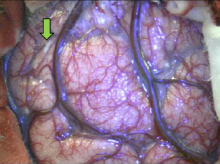
CSF leakage and bone erosion caused by cysts in basal cistern neurocysticercosis treated by endoscopy

Enviado por admin el Mar, 04/09/2019 - 20:12

Neuroendoscopy is a diagnostic and therapeutic method of various forms of neurocysticercosis. Extraparenchymal neurocysticercosis is able to produce bone and dural erosion, so must be considered in the differential diagnosis of cerebrospinal fluid.

First experience using 5-ALA for high grade gliomas in the Almenara Hospital

Enviado por admin el Mar, 04/09/2019 - 20:04

The infiltrative nature of malignant gliomas make their resection a challenge to neurosurgeons. 5-aminolevulinic acid (5-ALA) is a drug that helps to properly delimit the edges of a high-grade glioma, by using a modified microscope, and thus increases the degree of tumor resection, ultimately improving the prognosis of the disease.

Prognostic factors in the survival of patients operated of astrocytoma grade II

Enviado por admin el Mar, 04/09/2019 - 19:43

Survival of patients operated on Astrocytoma grade II in our hospital is 56.7 months, with the factors of better prognosis being the "low risk" group and the total resection. Its classification into prognostic risk groups based on pre-surgical clinical data helps us predict survival before surgery.

Cerebral aneurysm diagnosed with angio-tomography and its surgical correlation at Daniel A. Carrión Hospital in the period May 2004 to November 2007

Enviado por admin el Lun, 05/08/2017 - 17:21

The authors study 51 patients with subarachnoid hemorrhage due to suspected intracranial aneurysms who underwent surgery in the Daniel A. Carrión Hospital, Peru, from May 2004 to Nov 2007, to determine the validity, sensitivity and specificity of 16 multislice spiral CT angiography (ATEM) in the diagnosis of cerebral aneurysms. They concluded that CT angiography is an excellent noninvasive test for the detection of intracranial aneurysms and to determinen their location.    

MRI Spectroscopy (H+) in the differential diagnosis between brain tuberculomas and intra-axial neoplastic process

Enviado por admin el Lun, 05/08/2017 - 17:16

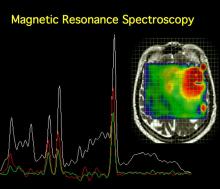
Magnetic resonance spectroscopy allows a more accurate diagnosis of intraparenchymal brain lesions of uncertain etiology and occurs when the lesion is unique, brain neoplasia and tuberculomas, enabling better-targeted treatment for patients. The authors carried out a study in 24 patients aged between 02 and 72 years who underwent the brain structural and spectroscopic study univoxel with voxel of 20 mm x 20 mm x 20 mm (8 cc) located at the level of the lesion determined.

Type IV spinal arteriovenous malformations

Enviado por admin el Lun, 05/08/2017 - 17:02

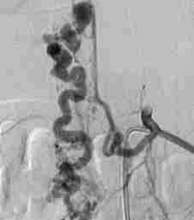
The authors present the case of a 32 year old patient with spinal cord compression syndrome of 10 months of evolution. Magnetic resonance imaging showed signal voids causing myelopathy that spinal angiography showed to be a type IVb spinal arteriovenous malformation (perimedular arteriovenous fistula type II) supplemented by a posterior spinal artery that originated next to the Adamkiewicz artery from the segmental artery T11 left.

Chronicle of the Department of Neurosurgery of Police Hospital

Enviado por admin el Lun, 05/08/2017 - 16:55

Neurosurgery is successively founder Mauricio Dávila in 1944 at the Police Hospital, Esteban Roca in 1947 in the Obrero Hospital, Fernando Cabieses at the Institute of Neoplastic Diseases and Juan Franco the the Institute of Neurological Sciences . After these services have made many more, led by prominent and prestigious Neurosurgeons meeting in what today is the Peruvian Society of Neurosurgery.

Surgical Treatment of Traumatic brain injury: Results in a series of 76 patients

Enviado por admin el Lun, 05/08/2017 - 16:20

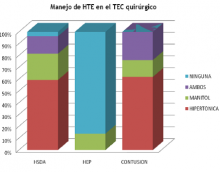
Traumatic brain injury (TBI) is the leading cause of morbidity and mortality mainly in young people, and also one of the most common neurosurgical diseases in daily practice. Medical and surgical optimal treatment are essential to achieving shorter hospital stay, good Glasgow scale and GOS, reduce complications and mortality rate.The aim of this study is to present the results in 76 patients operated on at Almenara Hospital in 2008 and 2009.

Intracraneal Pressure Monitoring

Enviado por admin el Lun, 05/08/2017 - 16:09

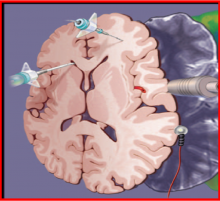
Continuous monitoring of intracranial pressure (ICP) is a therapeutic guide for the proper management of Brain injured patients at risk of intracranial hypertension. Intracranial hypertension is associated with high morbidity and mortality in brain injury patients of different etiologies, hence the importance of timely recognize and treat this entity. For this reason the need for monitoring, analysis and interpretation of intracranial pathophysiological is an important part of multimodal neuromonitoring together with clinical and CT evaluation. 

Páginas

Suscribirse a Peruvian Journal of Neurosurgery RSS