Usted está aquí

Surgical treatment of Pituitary Adenoma: Results in a series of 403 patients

Enviado por admin el Dom, 05/07/2017 - 16:57

Pituitary adenomas are benign tumors that occur in approx. 10 to 15% of all intracranial tumors. Treatment can be carried by transsphenoidal resection (TSR) or transcranial resection (TCR). The aim of this study is to present the results of surgical treatment in a series of 403 patients operated at the Almenara Hospital, in Peru, between 2000 and 2008.

Cerebellar Mutism: Brief revision

Enviado por admin el Dom, 05/07/2017 - 16:46

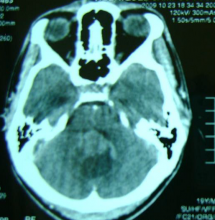
Cerebellar mutism is a non infrequent alteration of the language in patients who underwent to a surgery of different injuries, generally tumors, affecting vermis or cerebellar hemispheres. In this paper the authors make a brief revision of this problem at the time they report a case of a 18 years-old patient who had a mass in the cerebellar vermis that was operated trough a suboccipital craniotomy and telovelar approach.

Third Cranial Nerve Palsy as sign of Chronic Subdural Hematoma: Case Report

Enviado por admin el Dom, 05/07/2017 - 16:39

Chronic subdural hematoma (CSH) is a common pathology in elderly patients. Its etiology is usually due to rupture of bridging veins, which kept bleeding into the subdural space will generate a chronic inflammatory process which results in a collection that will grow in volume producing symptoms of intracranial hypertension or neurological focus. The third nerve palsy presenting as chronic subdural hematoma is rare, the authors present the case of a patient with this disease.

Intraventricular astroblastoma: Case report

Enviado por admin el Dom, 05/07/2017 - 16:29

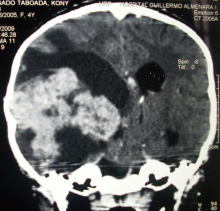
Astroblastoma is a tumor of the glial lineage of unknown origin and uncertain prognosis. Represents 0,4 - 2,8% of brain gliomas, which generally presents in youth people as an hemispheric well defined tumor, often associated with a cystic component, being extremely rare intraventricular location. The author reports the case of a patient of 4 years old girl with intraventricular astroblastoma and a review of the literature.

Percutaneous Rhizotomy Gasserian ganglion with ball for treatment of trigeminal neuralgia

Enviado por admin el Dom, 05/07/2017 - 01:16

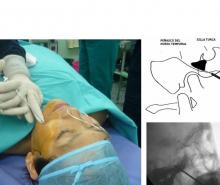
The authors present four patients with trigeminal neuralgia treated by percutaneous rhizotomy of the Gasserian ganglion with balloon. The procedure was performed with fluoroscopic assistance with sedo analgesia without intubation. All patients were females. The sector most affected was V2 (50%). We obtained the three forms of balloon described (pear, hourglass, oval). In the four patients had immediate pain relief in the immediate postoperative.

Intraoperative rapid diagnosis by SQUASH smears in central nervous system lesions. An early institutional experience.

Enviado por admin el Dom, 05/07/2017 - 01:06

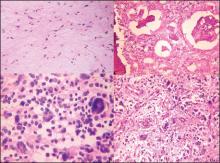
 Intra-operative cytological diagnosis of the CNS lesions helps the neurosurgeon to decide about the extent of resection particularly in eloquent areas. The squash or crush preparation of the available tiny tumor tissue at the start of the resection is a time saving and lead to better decision on further plan of surgery.The authors conclude that Intra-operative SQUASH smear cytology is a fairly rapid and reliable method of intra operative diagnosis for a wide spectrum of central nervous system lesions.

Cervical Drezotomy to manage intractable pain in avulsion injuries of the brachial plexus

Enviado por admin el Dom, 05/07/2017 - 00:53

Patients affected with chronic pain due to lesions by avulsion of the brachial plexus are treated with many different surgical procedures of brachial plexus and long term schemes of pain therapy remaining with high scores in VAS. Drezotomy is an important alternative to relief persistent pain related to the topography of the deafferentation. The author reports the results of the first cases operated in our institution by this therapy mode.

Endovascular embolization of hypervascular craniofacial tumors

Enviado por admin el Dom, 05/07/2017 - 00:49

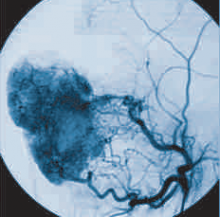
The autors review the most common hypervascular craniofacial tumors usually managed with endovascular embolization techniques. Even though controversial issues remain, there are reasonable data supporting the use of transcatheter devascularization techniques prior to the surgical resection of these lesions in order to reduce the intraoperative blood loss, the operative time and to facilitate their complete removal.

Skull base approaches: Brief revision (II part)

Enviado por admin el Dom, 05/07/2017 - 00:43

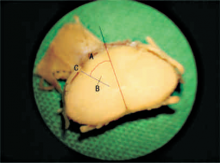
The surgical approaches to reach the base of the skull represents a challenge for the neurosurgeon. The knowledge of anatomy and neurosurgical technique to use is essential before tackling the diseases that are located there. The present is a brief review of the main skull base approaches, describing the surgical technique of each of them, taking as reference the experience acquired by the author in a course led by Antonio Bernardo.

Pachymeningitis Granulomatous craneocervical in patient with suspected flat meningioma

Enviado por admin el Dom, 05/07/2017 - 00:36

The hypertrophic pachymeningitis is a rare granulomatous disease of the dura, characterized by thickening of chronic granulomatous, which may affect, both intracranial and cervical or thoracic spine. Its etiology is unknown although it is associated with various concomitant disease. We present a patient with hypertrophic pachymeningitis of granulomatous tuberculous etiology likely that ongoing with symptoms of multineuritis cranial and spinal cord compression, who underwent surgery in our hospital.

Páginas

Suscribirse a Peruvian Journal of Neurosurgery RSS