Usted está aquí

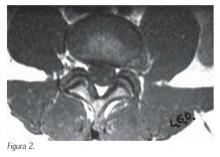
Diagnosis and treatment of extraforaminal lumbar disc herniation
Enviado por admin el Vie, 05/05/2017 - 00:23

Extraforaminal herniated disc have a relative frequency of presentation and are not described in our setting because they are probably not suspected. Magnetic resonance imaging is the test with the lowest risk of false negatives. In cases of suspicion, where they do not differ from the psoas muscle, tomography with discography should be performed. The paramedian and microsurgical approach is an excellent technique, with better advantages than the medial way.
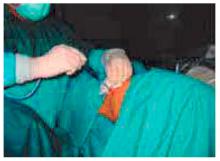
Coblation: New alternative in the treatment of sciatica for disc herniation

Enviado por admin el Vie, 05/05/2017 - 00:03

In the treatment of sciatica due to lumbar disc herniation, multiple surgical techniques have been used, from the traditional open surgeries to remove part of the intervertebral disc for decompress and reduce the pressure of this on the root, until its evolution into smaller incisions that allow decompression using the surgical microscope or through the use of endoscopy to access the disc. In some patients, however, even less invasive methods may be used for decompression.

Traumatic epilepsy in children

Enviado por admin el Jue, 05/04/2017 - 23:49

The relationship between encephalocranial trauma and traumatic epilepsy has been known since the time of Hippocrates (460-357 BC), who in his treatise 'Cranial Trauma' observed that a wound in the left temporal region of the skull produced convulsive seizures in the right hemisphere and viceversa. With industrialization and particularly with the advent of motorized vehicles, residences with different levels of height and unprotected and violent sports practices, the number of cranioencephalic injuries and traumatic epilepsy has increased alarmingly.

Clinical practice guide of Myelomeningocele

Enviado por admin el Jue, 05/04/2017 - 23:39
Myelomeningocele, an open defect of the neural tube, is the most common congenital anomaly of the central nervous system (CNS) and the main cause that determines a number of growth and developmental disabilities in the affected child. It occurs due to a failure of the closure of neurolation in the caudal neural plate during the fourth week of gestation (22 to 26 days of gestation).

Minimally invasive treatment of Arteriovenous Malformations

Enviado por admin el Jue, 05/04/2017 - 02:59

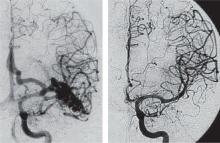
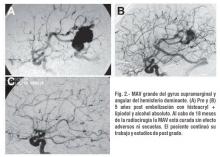
Cerebral Arteriovenous Malformations (AVM) are the most common type of intracranial vascular malformation and are the second most common cause (after cerebral aneurysms) of intracranial hemorrhage. Endovascular embolization and Stereotactic Radiosurgery as a single or combined treatment are useful alternatives for the management of AVMs high risk for surgery, however adequate training, equipment and experience in these technologies are necessary.

Cerebral Vasoespasm

Enviado por admin el Jue, 05/04/2017 - 02:55

Cerebral vasospasm can be defined as the focal or diffuse narrowing of the large and medium caliber capacitance arteries at the base of the brain that follows a hemorrhage in the subarachnoid space. Aneurysmal subarachnoid haemorrhage is the major etiology for vasospasm, although it has also been seen after bleeding from an arteriovenous malformation, tumors, or traumatic brain injury. Its diagnosis is not always easy and may have a temporary course.

Páginas

Suscribirse a Peruvian Journal of Neurosurgery RSS