Usted está aquí

Epidemiology of traumatic brain injury in children
Enviado por admin el Vie, 05/05/2017 - 23:12

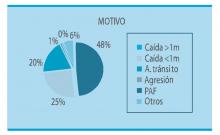
The BTI in the paediatric patient has special characteristic clinical and epidemiological that separate it from the adult, characteristics that must be taken in bill for the implementation of a suitable plan of attention in emergency, improvement of the reference system and of  promotional preventive measurements with the purpose of decrese the morbimortalidad.
Surgical practice guide of Myelomeningocele in emergency

Enviado por admin el Vie, 05/05/2017 - 22:55

Myelomeningocele is the most frequent and complex congenital malformation that is compatible with life. Our institution as a reference center at the national level for pediatric neurosurgical pathology receives with relative frequency transfers of infants with open spina bifida. According to the Office of Institutional Statistics and Informatics in Peru, during 2006, congenital malformations were the main cause of hospitalization in the neurosurgery service, with myelomeningocele being the second cause after congenital hydrocephalus. 

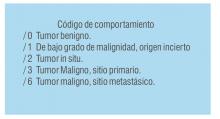
Clinical practice guide of Brain tumours

Enviado por admin el Vie, 05/05/2017 - 22:45

Currently four types of treatment are used: Surgery, Radiotherapy (RT), Chemotherapy (QT) and Immunotherapy (IT). Surgery is the most common treatment for intracranial tumors. RT is the use of X-rays or gamma and its purpose is to eliminate tumor cells from the outside and reduce their size (external beam RT); RT can also be used by placing radioactive materials into the tumor, through thin plastic tubes, radioisotopes, in order to remove the tumor cells from the inside (internal RT).

Clinical and radiological results of transpedicular fixation in symptomatic spondylolisthesis in adults

Enviado por admin el Vie, 05/05/2017 - 21:55

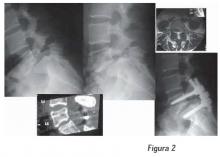
Retrospective, descriptive and analytical study of 34 patients, women 18, men 16; average age 50.8 years, with diagnosis of degenerative and isthmic spondylolisthesis (with degenerative component), Treated surgically with transpedicular fixation (FT) + arthrodesis Posterolateral (APL), in the Department of Neurosurgery of the Guillermo Almenara National Hospital between January 1966 and December 2004.

Transoral decompression and posterior fixation in atlanto – axial instability

Enviado por admin el Vie, 05/05/2017 - 21:30

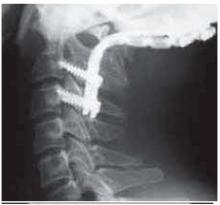
The authors report six cases in which, was used an trans oral technique to deal with the upper cervical spine segment. The cases were: four cases of rheumatoid arthritis and 2 cases of basilar impression. We described the clinical picture and the surgical technique
used. Then we described the techniques used for posterior stabilization in each case.

Cerebral vasospasm in subarachnoid hemorrhage due to ruptured cerebral aneurysm: Pathophysiology and treatment

Enviado por admin el Vie, 05/05/2017 - 21:21

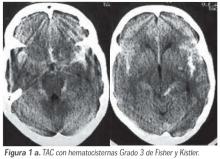
The main cause of death and sequelae of patients with a subarachnoid haemorrhage (SAH) due to rupture of a cerebral aneurysm, and who manage to reach a specialized center, is still ischemia or ischemic deficit Delayed (IDD) secondary to cerebral vasospasm.

Neurotization in braquial plexus injuries of adult patients: Technique and results

Enviado por admin el Vie, 05/05/2017 - 20:52

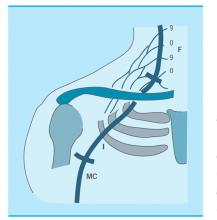
Neurotization of the suprascapular and musculocutaneous nerves with the accessory spinal, phrenic and intercostal nerves show good results. In case of incomplete injury, the neuromuscularisation technique of the musculocutaneous with the ulnar (Oberlin) should also be considered. Unlike what happens at the facial level, the hypoglossal is not useful for neurotizing the brachial plexus.

Cuadripolar electrode computarized method in the treatment of trigeminal neuralgia

Enviado por admin el Vie, 05/05/2017 - 00:34

A recent extensive review of the results of conventional percutaneous thermo-coagulation indicated that it is the most effective percutaneous technique with the highest residual morbidity. The present communication is the summary, results and recommendations of our original method, designed to minimize unnecessary morbidity of the procedure. It is based on 31 years of experience in 370 procedures, most of the last 167 performed with our method and technique.

Páginas

Suscribirse a Peruvian Journal of Neurosurgery RSS