Usted está aquí

Carotid trapping as treatment for giant cervical carotid aneurysm

Enviado por admin el Dom, 05/07/2017 - 00:30

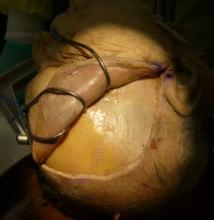
Surgical management has been the only one method of treatment for broken Extracranial Interna Carotid Artery (EICA) in the last 100 years, but was limited in those aneurysms with distal extension to the skull base. Nowadays, new technologies such as endovascular technique through the placement of stents, coils and carotid trapping are shown as alternatives for this difficult disease. We report a 44 years old man with left giant carotid cervical aneurysm, who was undertaken to carotid trapping in our hospital.

The location of the cerebral functions and the birth of Neurosurgery

Enviado por admin el Dom, 05/07/2017 - 00:22

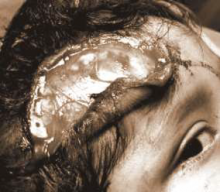
On November 25, 1884, at the Hospital for Epilepsy and Paralysis and other Diseases of the Nervous System (now Maida Vale Hospital) in London, surgeon Rickman Godlee, led by neurologists A.H. Bennet and David Ferrier, who traced in the skull the major convolutions of the Brain and the exact point where he was to trepanarse, operated from a brain tumor to the young Henderson, native of the county of Dumfries.

Epidemiology of traumatic brain injury in children

Enviado por admin el Sáb, 05/06/2017 - 23:14

The trauma cranioencephalic (TCE) in the paediatric patient has special characteristic clinical and epidemiological that separate it from the adult, characteristics that must be taken in bill for the implementation of a suitable plan of attention in emergency, improvement of the reference system and of  promotional preventive measurements with the purpose of decrese the morbimortalidad.

Stereotactic Radiosurgery: Gamma Knife or Linac?

Enviado por admin el Sáb, 05/06/2017 - 23:05

The authors investigate Gamma Knife and LINAC radiosurgery technologies regarding technical aspects and clinical results. They concluded that Linac based radiosurgery is a practical treatment method with equivalent physical, radiobiological and clinical results compared to the gamma knife technology although its routine methodology requires multidisciplinary effort.

Skull base approaches: Brief revision (I part)

Enviado por admin el Sáb, 05/06/2017 - 22:51

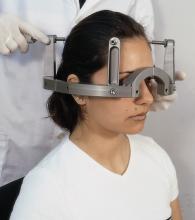
Surgical approachs to the skull base are usefull in the treatment of expansive and vascular lesions that localize there or near there, increasing significantly the exposition and reducing the need for brain retraction with minor risks of injury during their resection. This is a brief revision of the main approaches to the skull base that describes surgical techniques of them, taking as a reference the experience gained by the autor in a course directed by Dr. Antonio Bernardo.

Primary central nervous system lymphoma: Case report

Enviado por admin el Sáb, 05/06/2017 - 22:33

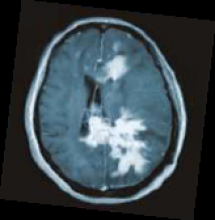
Primary central nervous system lymphoma (PCNSL) is a rare form of non-Hodgkin lymphoma (NHL) which affects brain, spinal cord, leptomeninges and eyes. Its clinical course and radiological features are different in inmunocompetent patients comparated with inmunocomprised patients, especially in patients with acquired inmunodeficiency syndrome (AIDS).

Surgical treatment of carpal tunnel syndrome by minimally invasive non endoscopic technique (MINET)

Enviado por admin el Sáb, 05/06/2017 - 20:14

The authors present the anatomical considerations that support a surgical alternative designed for the surgical treatment of Carpal Tunnel Syndrome (CTS). The design of the technique maintains the concept of minimally invasive and at the same time the one of not requiring the use of endoscope. The results obtained in the last 100 cases are presented.

Epidemiological Analysis of Neurosurgical Patients in the Intensive Care Unit

Enviado por admin el Sáb, 05/06/2017 - 19:57

The care of neurosurgical patients in intensive care units has proven to be beneficial not only for patients but also for hospital institutions. However, the benefits of the care that these units provide to the neurocritical patient depend on multiple factors intrinsic to the patient, which should be studied in order to make better use of resources in the care of them. The present descriptive work shows an analysis of the characteristics of the patients admitted by the specialty of Neurosurgery to the Intensive Care Unit of the Ricardo Palma Clinic during 2007.

Stereotactic Radiosurgery in Intracranial Meningioma

Enviado por admin el Sáb, 05/06/2017 - 19:50

The meningioma has the second place in frequency between the intracranial tumors. The best treatment is complete surgical resection with resection of its dural insertion and areas of cranial invasion.At present, Stereotactic Radiosurgery has become a reasonable therapeutic alternative, especially for meningiomas of the skull base due to its high rate of tumor control and low complications.

Clinical practice guide of Infections and infestations of the Central Nervous System

Enviado por admin el Sáb, 05/06/2017 - 19:38

Infectious diseases and infestations are due to the local aggression of the central nervous system and its envelopes, by microbial or parasitic agents, capable of causing damage to our health, causing local and general symptoms.This pathology can afect: CRANE AND BRAIN: Epidural empyema, Subdural empyema, intracerebral abscess, ventriculitis. VERTEBRAL AND SPINAL CORD : Epidural empiema, subdural empyema or intramedullary abscess. CNS  CYSTICERCOSIS: Racemous cysticercosis, cystic cysticercosis.

Páginas

Suscribirse a Peruvian Journal of Neurosurgery RSS