Usted está aquí

Anaplastic ependymoma in pediatric population
Enviado por admin el Sáb, 05/06/2017 - 14:51

Ependymomas in the pediatric population should be considered high risk if the patient is younger than 3 years of age at the time of diagnosis, if he has preoperative metastases, features of anaplasia, or residual tumor, surgery as a therapeutic modality is the one that Provides greater disease-free survival, adjuvant therapy does not determine predictive value.

History of the Discovery of Normal Pressure Hydrocephalus

Enviado por admin el Sáb, 05/06/2017 - 14:43

When we read or hear Normal Pressure Hydrocephalus or chronic hydrocephalus of the adult as it is called at the moment, the Hakim Adams Syndrome comes to our mind immediately. We find it very important to expose the history of the discovery of hydrocephalus at normal pressure,
Pathology that to date has many questions and is a subject of constant research.

Radiosurgery in acoustic neurinoma: Preliminary results at the Pacific Radiosurgery Institute

Enviado por admin el Sáb, 05/06/2017 - 01:17

The authors present a serie of cases of acoustic neurinoma cases treated with LINAC. Actuarial control rates at 1 and 2 years were both 98% and 5% at 90%. Only 4 patients (1%) required surgery for tumor growth. Seventeen patients (4.4%) experienced facial paresis and 14 patients (3.6%) reported facial hypoesthesia. The risk of these complications is directly related to tumor volume and / or the prescribed dose at the periphery of the tumor.

Cognitive Impairment of Cortical Cognitive Superior Functions in Brain Trauma

Enviado por admin el Sáb, 05/06/2017 - 01:07

The presence of neuropsychological alterations in the mental status of patients with brain traumatic injury (BTI). Are characteristic of the disease and are considered as focal symptoms or isolated deficits. In frequency in the BTI. There is a usual way of presenting cognitive impairment. The alterations of the prefrontal cortex and the irregularities of the superior order of the behavior are one of the first psychopathological manifestations of BTI.


Intradural lumbar disc herniation

Enviado por admin el Sáb, 05/06/2017 - 00:55

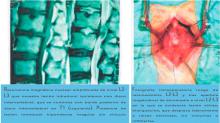
 A clinical case of intradural lumbar disc herniation at the L2-L3 level is presented and a review of the pathogenesis, clinical features, imaging findings, treatment and prognosis of these lesions is performed. Localization of a portion or all of it in the intradural space is an uncommon complication that can be difficult to differentiate clinically and imagingly from both common hernias and intradural tumors. Its diagnosis is often presumptive until the moment of the surgical treatment.

Clinical practice guide of Brain tumours: Part III

Enviado por admin el Sáb, 05/06/2017 - 00:43

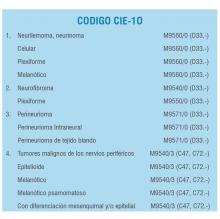
The tumors of the meninges are primary tumors that originate in meningothelial cells or non-meningothelial mesenchymal cells. The different types of existing tumors are determined by the appearance of the neoplastic cells in the microscope, thier etiology is unknown. Pathophysiology: The presence of the tumor in the intracranial level produces an imbalance of the compartments of the intracranial content, that is of the blood volume and the CSF, producing endocanean hypertension.

Spine cord injury in children

Enviado por admin el Sáb, 05/06/2017 - 00:22

Spinal cord injury is infrequent from infancy to pre-adolescence. The incidence of traumatic lesions of the infantile spinal cord in relation to all age groups oscillates between 0.65% and 11%. Spinal injuries in relation to mild head injuries are 1 / 25-30, and severe head injuries are 1/20; However this incidence may not be as reliable because the statistics are not including minor problems or those that are not hospitalized or survive before reaching the hospital.

Direct Anterior Fixation with Cannulated Screws in Odontoid Fracture

Enviado por admin el Sáb, 05/06/2017 - 00:12

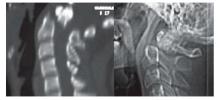
The fractures of Odontoid type II according to the classification of Anderson and D'Alonzo are considered the most unstable and were always difficult to handle. External immobilization is used as a frequent method by some authors, however surgery provides better fixation. Back surgery such as inter laminar and Magerl interfacetaria are used but they block the rotational mobility of the atlas axis segment.

Surgical practice guide of Third Endoscopic Venriculostomy

Enviado por admin el Sáb, 05/06/2017 - 00:05

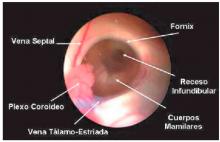
Minimally invasive surgical procedure performed through a single hole in the skull (monoportal), with the use of a neuroendoscope to allow the fenestration of the floor of the third ventricle, thus communicating the ventricular system with the subarachnoid space. The third endoscopic ventriculostomy indications are: Obstructive or Non-Communicating Hydrocephalus (as the main indication) for: Silvio aqueduct stenosis, Tumor obstruction of cerebrospinal fluid circulation. In other types of hydrocephalus its efficacy is lower.

Clinical practice guide of Brain tumours: Part II

Enviado por admin el Vie, 05/05/2017 - 23:57

In tumors of the posterior fossa and previous analysis of the neurological conditions upon admission (in adults, Karnofski greater than and equal to 70) and the age of the patient, a ventriculoperitoneal shunt will be planned first if there is hydrocephalus or when in Each case is justified; Then total or subtotal or partial resection of the tumor will be performed to decompress the cranial cavity, reduce endocranial hypertension in the posterior fossa, and obtain tumor material for histopathological analysis.

Páginas

Suscribirse a Peruvian Journal of Neurosurgery RSS