Usted está aquí

Percutaneous microcompression of the Gasser ganglion for trigeminal neuralgia. Clinic Maison de Santé 2005 – 2009
Enviado por admin el Mié, 05/03/2017 - 17:09

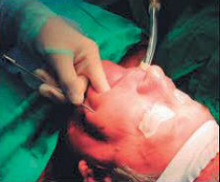
The percutaneous microcompression of the Gasserian ganglion with the balloon of Fogarty is a highly effective technique in the surgical treatment in patients with trigeminal neuralgia. The authors realized a retrospective and prospective study of 24 patients with trigeminal neuralgia treated surgically by the technique of percutaneous microcompression of the Gasserian ganglion with the balloon of Fogarty in the Clinics Maison de Santé between January 2005 until December 2009.
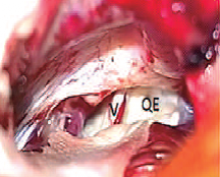
Trigeminal Neuralgia by cerebellopontine angle epidermoid cyst

Enviado por admin el Mié, 05/03/2017 - 14:03

Epidermoid cysts are tumors of embryological origin that are located in cerebellopontine angle in third place after schwannomas and meningiomas. Three cases of trigeminal neuralgia in relation to epidermoid cysts of the cerebellopontine angle compressing the trigeminal
nerve are presented. Clinical presentation, diagnostic studies, surgical treatment and postoperative results are discussed. 

Awake Craniotomy for resection of low grade glioma. First experience in Perú 2008

Enviado por admin el Mié, 05/03/2017 - 01:28

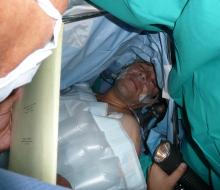
The aim of the brain tumour surgery is the maximal tumour resection with the minor neurological post operatory deficit; however this is not always possible mainly in case of lesions near to functional areas. The awake craniotomy is a safe technique that allow us to evaluate the neurological status during the surgical act and to detect early any deficit in the function. The authors present the first report of case in Peru of awake craniotomy for low grade glioma resection, carried out in the Guillermo Almenara Hospital in February 2008.

Technique of the “cono embossed or cone of cookie” on the reconstruction of the neck at displastic giant aneurysm of the carotide paraoftalmic siphon: Intra-aneurismal Stent

Enviado por admin el Mar, 05/02/2017 - 22:03

The dysplastic giant aneurysm with wide neck is a difficult complex aneurysm surgery, the use of endovascular therapy in this pathology is promising and waffle cone technique is very useful in those in wich when we use a Stent and it is impossible to exceed the distal end of the aneurysm neck.

Subarachnoid hemorrhage II: Cerebral aneurysms

Enviado por admin el Mar, 05/02/2017 - 21:55

The Subarachnoid Hemorrhage (SAH) is a relatively common disease with an incidence is 5% of cerebral vascular disease. The estimated prevalence of 10 new cases per 100,000 people each year. The proportion of HSA varies with age, being the most prevalent group between 50 and 60. 

Subarachnoid hemorrhage I: Diagnosis and Management

Enviado por admin el Mar, 05/02/2017 - 21:41

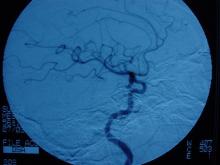
Subarachnoid hemorrhage (SAH) is defined as the presence of blood in the subarachnoid space and cisterns of the base. The source is variable and may be due to rupture of intracranial aneurysms (80%), arteriovenous malformations (AVMs), tumors and brain trauma.Treatment should be administered as soon as possible within 72 hours, both surgical and endovascular techniques to prevent complications.

Pterional Keyhole Approach for treatment of Aneurysms 2009

Enviado por admin el Mar, 05/02/2017 - 19:04
Pterional Keyhole for aneurysms

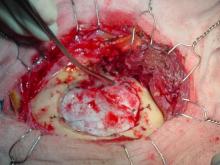
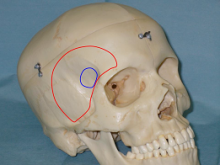
The pterional approach is the most common approach in vascular neurosurgery, but in recent years has been an increasing interest in minimally invasive surgery or keyhole surgery. The authors present preliminary results from the use of pterional keyhole approach in surgery for cerebral aneurysms performed in the Cayetano Heredia Hospital, Peru, in 2009.

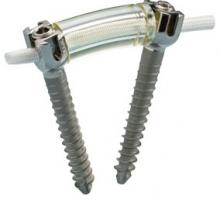
Two years of Lumbo-sacral spine dynamic stabilization in Rebagliati-Essalud Hospital during the period January 2012-October 2013

Enviado por admin el Jue, 04/27/2017 - 11:02

The authors carried out a study of 25 patients with unstable spine in order to determine their clinical outcome after dynamic stabilization of the spine at the neurosurgery spine service at HNERM during the period January 2012 to October 2013. Dynamic stabilization has demonstrated efficacy in pain control with a minimum length of hospitalization.

Páginas

Suscribirse a Peruvian Journal of Neurosurgery RSS